Aldar vs Emaar: Which Developer in the UAE Fits Your Goal
Emaar and Aldar are two of the UAE’s leading government-backed developers. In this article, we break down the difference between them.

Andrey Neginskiy
Real estate expert, CEO of Neginski
At a Glance
Emaar and Aldar are government-backed developers in the UAE, focused mainly on Dubai and Abu Dhabi. Both markets are liquid and reliable for investors, but their potential differs: Dubai continues to grow at a steady pace and has the status of a mature investment hub, while Abu Dhabi is growing faster on the back of rising demand.
Emaar builds mostly in Dubai. The developer delivered Burj Khalifa, Dubai Mall and several master communities: Dubai Creek Harbour, Mina Rashid, Dubai Hills, Beachfront, The Oasis and others. Within one master community, Emaar may launch multiple residential projects with a large number of apartments, townhouses and villas.
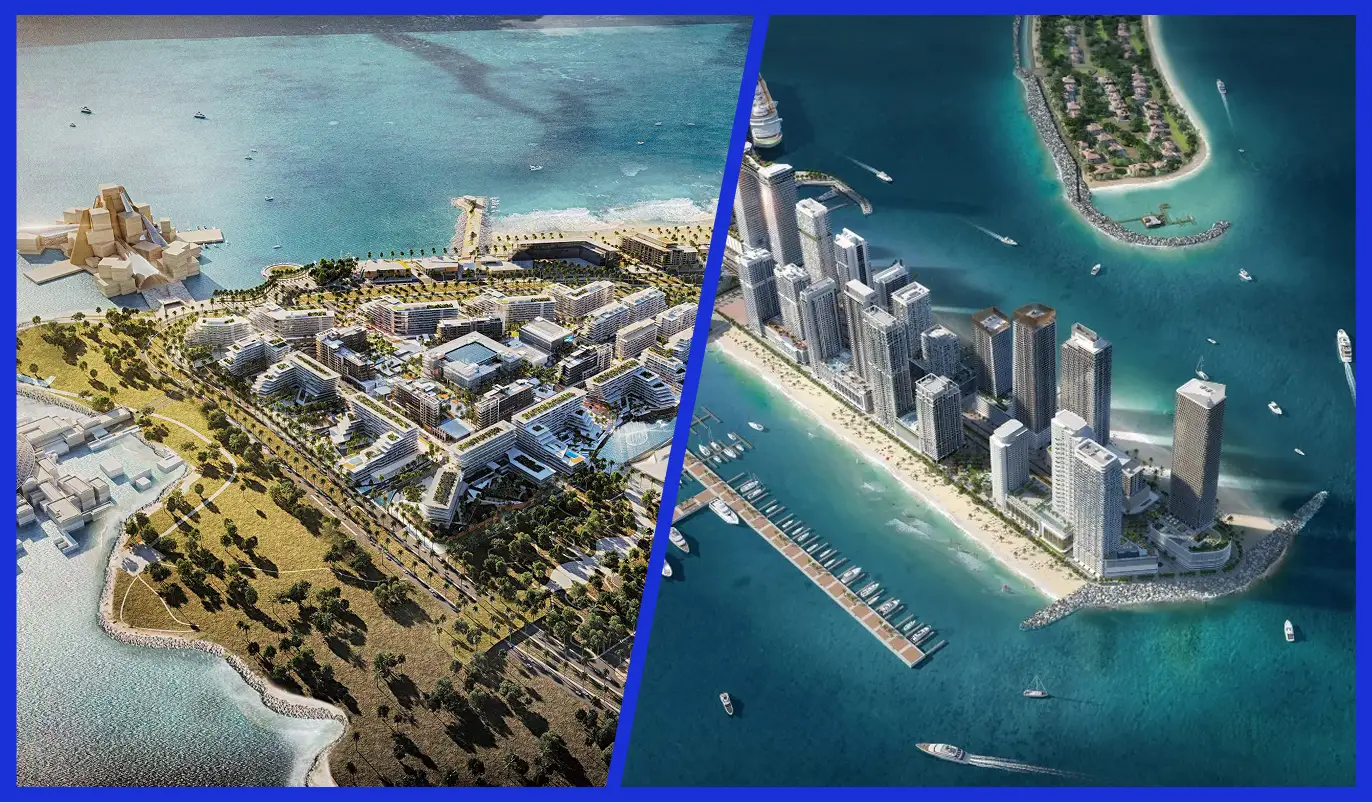
Aldar has projects in both Dubai and Abu Dhabi. Its portfolio includes Saadiyat and Fahid Islands, as well as master communities such as Saadiyat Cultural District, Saadiyat Lagoons, Athlon and Wilds. Aldar projects are typically in premium locations and focus on privacy.
The key differences between the developers are where they build, how many units they deliver within a project, typical developer payment plans, entry price points and how often they launch new projects.
Dubai And Abu Dhabi: Market Comparison
In this article, we look at two of the UAE’s largest government-backed developers: Emaar and Aldar. They focus primarily on two markets: Dubai and Abu Dhabi. Here is how the emirates differ.
Dubai: stabilisation and moderate growth
Dubai has been in demand among international buyers since 2002, when the emirate passed a law allowing foreign nationals to own property as freehold in designated freehold zones.
Since 2012, average property prices in Dubai have moved up and down, reflecting global upturns and downturns. The market bottomed out in 2020 during the COVID-19 crisis.

In the next 1–2 years, the market may see a minor price correction after the fast growth phase, based on Neginski analysts’ assessment. Even with slower price growth, sales volumes are not falling, which is a sign of a healthy market
In 2026, the market is moving back towards balance after the strong upturn that began in 2021. Supply is catching up with demand, which remains high. According to DXB Properties, in January 2026 the market recorded almost 17,000 transactions worth over AED 70bn (~US$19bn), up 59.13% compared to January 2025.
From 2025 to 2027, up to 240,000 new residential units are expected, with roughly 120,000 in 2026, according to Two Continents. This limits overly aggressive price growth and encourages developers to offer attractive purchase terms. Dubai continues to strengthen its position as a resilient, competitive real estate market on the global stage.
Earn rental income in Dubai
hassle-free
Property selection, rental-ready setup, full management
and transparent reporting

Abu Dhabi: an early-stage market with high potential
In Abu Dhabi, the law allowing foreigners to own property as freehold was passed only in 2019. This step helped diversify the emirate’s economy and accelerated market development.
Compared to Dubai, Abu Dhabi is more reserved and traditional. It holds more than 90% of the UAE’s oil reserves. New property launches are less frequent than in Dubai, roughly once every two weeks.
Abu Dhabi is more often chosen for living. It is easier to navigate on foot and has more green space. Neginski experts link this to the city’s original master plan: Abu Dhabi was designed as a comfortable environment for residents, while Dubai was developed as a tourism and business centre from the start.
Demand growth in the emirate is driven by two factors:
Launch of world-class attractions — Disneyland, a Sphere arena like in Las Vegas, the Sheikh Zayed Museum;
Development of Al Reem Island — by 2030 it is set to become part of an international business hub with a British legal and court system. More than 1,000 global companies have opened offices on the island.

2026 may be a good time to invest in Abu Dhabi real estate with a 3–5-year horizon
Geography: Where Emaar And Aldar Build
The key difference is simple: Emaar focuses mostly on Dubai real estate, while Aldar focuses on Abu Dhabi, although it also has projects in Dubai. Below, we outline the specific locations where both developers launch their master communities.*
*Master community — an area developed end-to-end by a single developer: not only residential projects, but also schools, retail and other infrastructure. These communities follow one design code and are planned in detail.
Emaar
5 master community locations by Emaar:
1. Dubai Creek Harbour. A waterfront district with an island separated from the mainland by a man-made canal. The area has a lagoon with beaches and yacht moorings, as well as a scenic promenade. Ras Al Khor Flamingo Sanctuary is a 9-minute drive away.
Why investors choose it:
Waterfront setting — prices typically grow faster than the market average;
Infrastructure still developing — schools, metro, restaurants and cafés, which supports long-term rental demand from families. The district also plans Dubai Square (a major shopping destination) and the Creek Tower observation tower;
Close to the centre — 10 minutes by car to Burj Khalifa (also built by Emaar) and Business Bay, where many expats work;
Growth potential — the area is often compared to Dubai Marina. Based on Neginski’s internal analytics, prices here are ~40% lower because the district is still developing. As infrastructure comes online, values may increase.
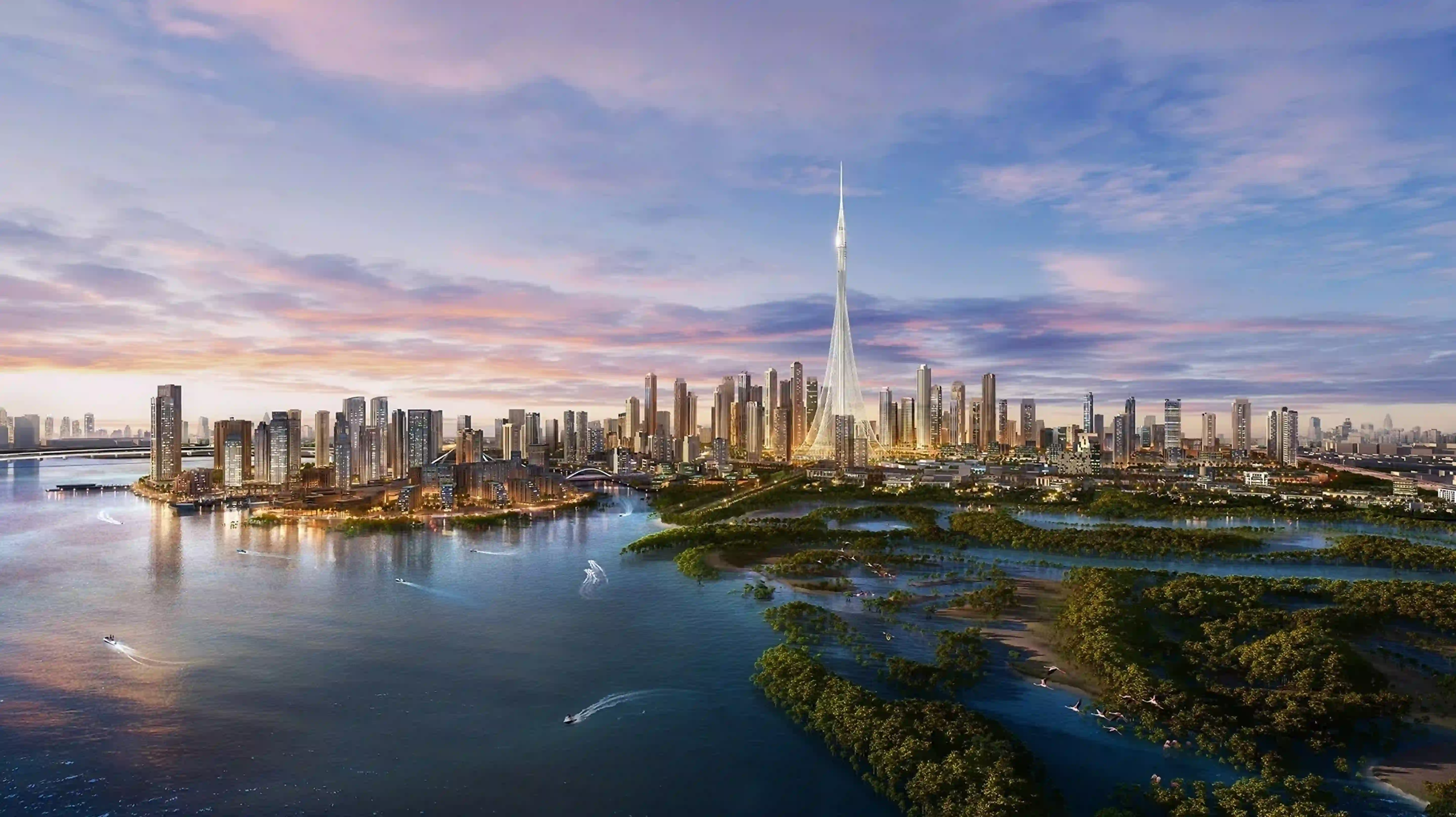
Ras Al Khor Sanctuary in DCH was the UAE’s first wetland recognised under the Ramsar Convention (since 2007)
2. Mina Rashid. A waterfront location in ‘old Dubai’. Historically, it is the city’s port, combining a cruise terminal with new residential development by the marina. A landmark here is the Queen Elizabeth 2 liner, permanently docked in Mina Rashid and operating as a hotel and attraction.
Why investors choose it:
Close to tourist hotspots — the community is on the coast near La Mer Beach and a 20-minute drive from Burj Khalifa;
A developing area — as infrastructure is delivered, property values may rise;
A waterfront resort with Downtown-level infrastructure — over 430 yacht berths, a palm-lined lagoon with a beach, a clubhouse, a theatre and a promenade.
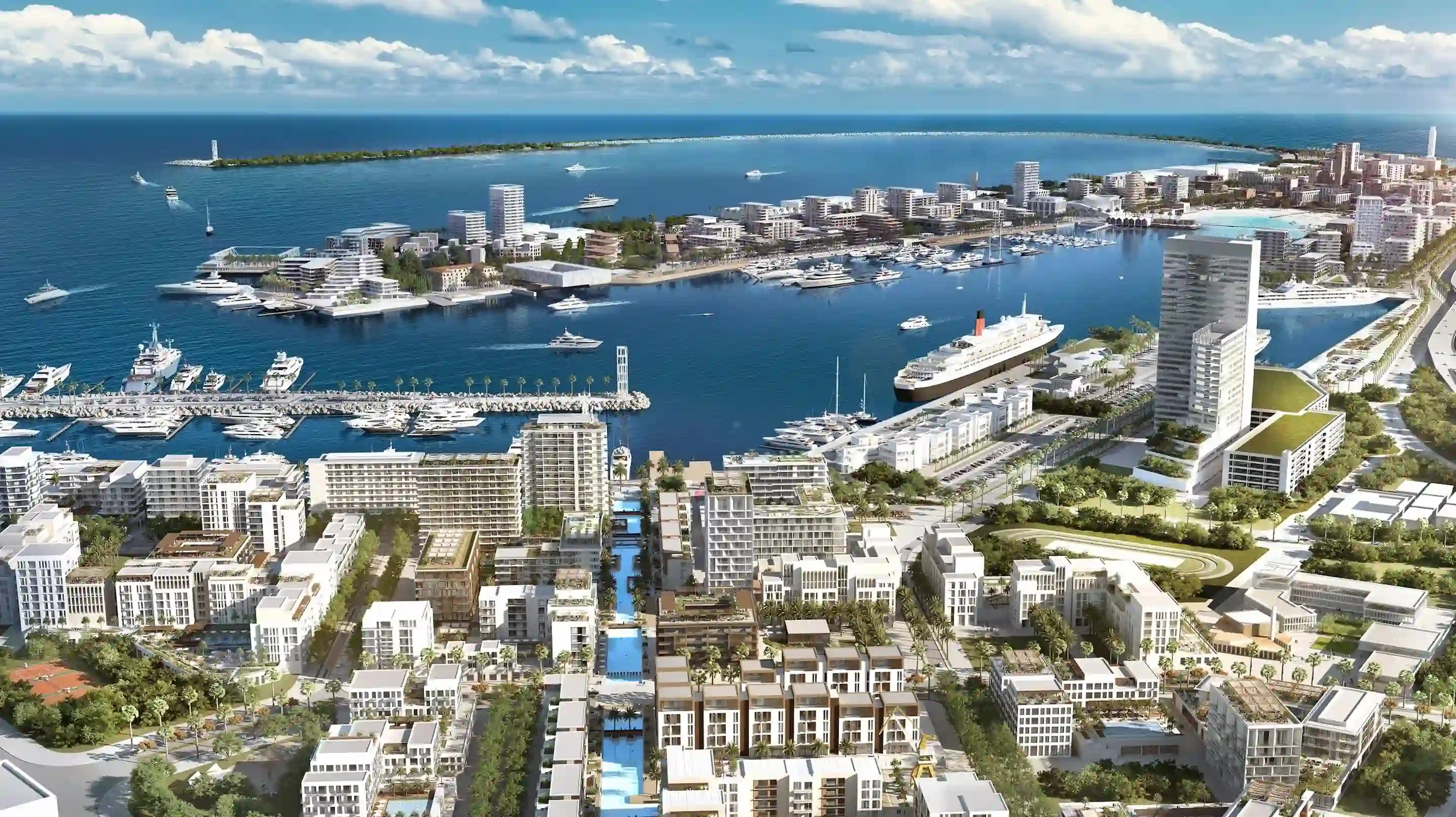
The Queen Elizabeth 2 is now permanently docked in Mina Rashid and operates as a floating hotel. During its service life, it carried over 2,500,000 passengers
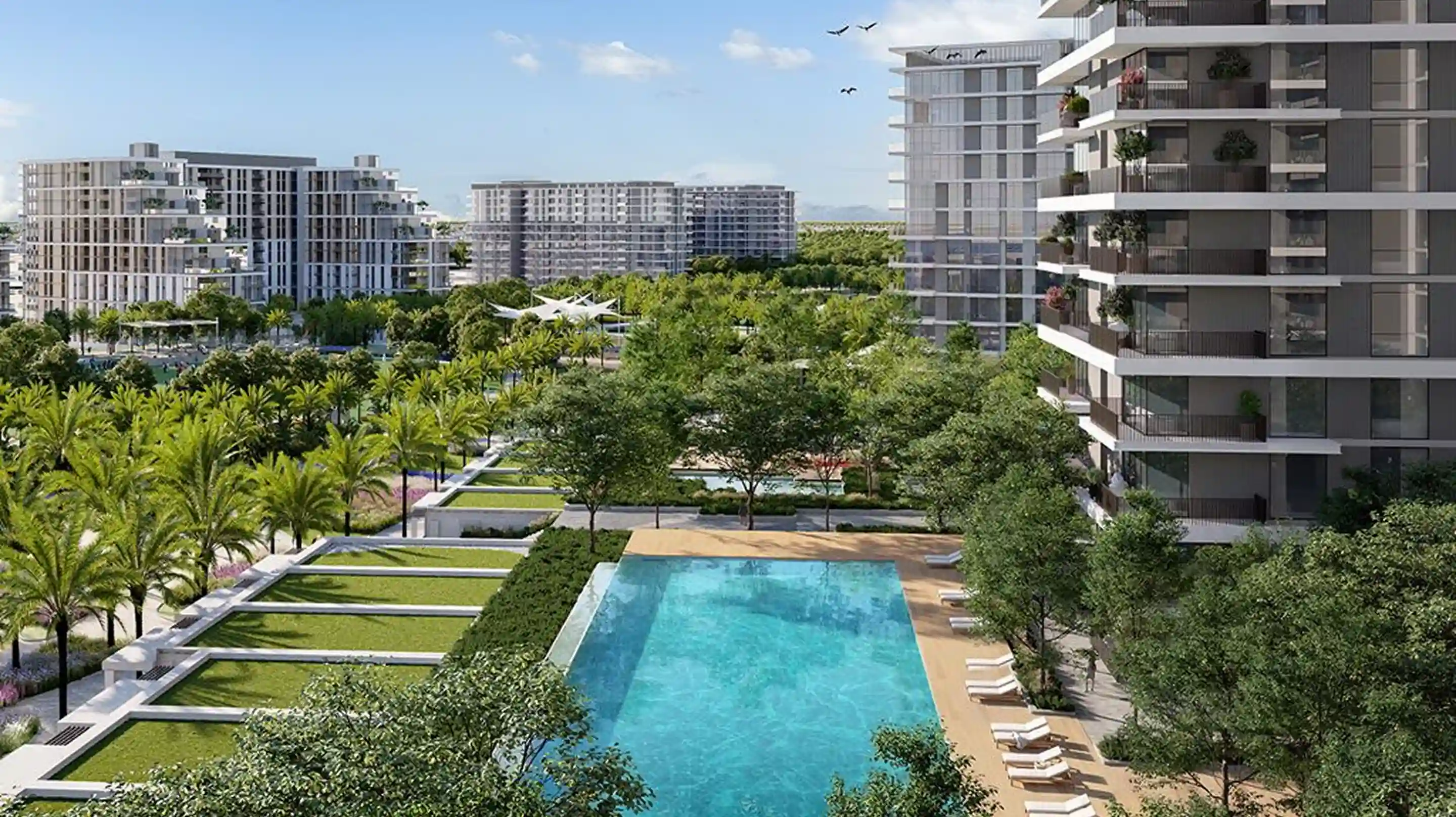
3. Dubai Hills. Emaar’s green master community within Mohammed Bin Rashid City. It includes 1,450,000 m² of parks and open space, Dubai Hills Park and Dubai Hills Mall, a cycling route, an 18-hole golf course and three schools under construction. Downtown Dubai and Dubai Marina are a 15-minute drive away.
Why investors choose it:
Long-term rental demand — this is a ‘liveable’ district: big parks, a mall, schools and sports infrastructure. Typical tenants are families and management teams who value comfort and everyday logistics;
Growth potential — as the community and infrastructure phases are completed, the area’s value proposition may strengthen;
High liquidity — driven by location between two major hubs: 15 minutes to Downtown and Dubai Marina reduces vacancy risk and supports resale.
Dubai Hills Mall features The Storm Coaster rollercoaster. It is listed in the Guinness World Records for the fastest vertical launch (41 km/h). The track runs inside the mall building
4. Emaar Beachfront. A waterfront master community in Dubai Harbour, between Dubai Marina and Palm Jumeirah. It offers a 1.5-kilometre private beach, 27 residential towers and around 13,000 m² of retail, plus quick access to Sheikh Zayed Road.
Why investors choose it:
‘Resort in the city’ format — units by a private beach with strong views tend to rent well and resell quickly in the premium segment;
Growth potential — development of Dubai Harbour and internal retail broadens the tenant base and improves daily convenience;
Convenient access — fast connection to Sheikh Zayed Road matters to buyers and tenants who need to move around the city.
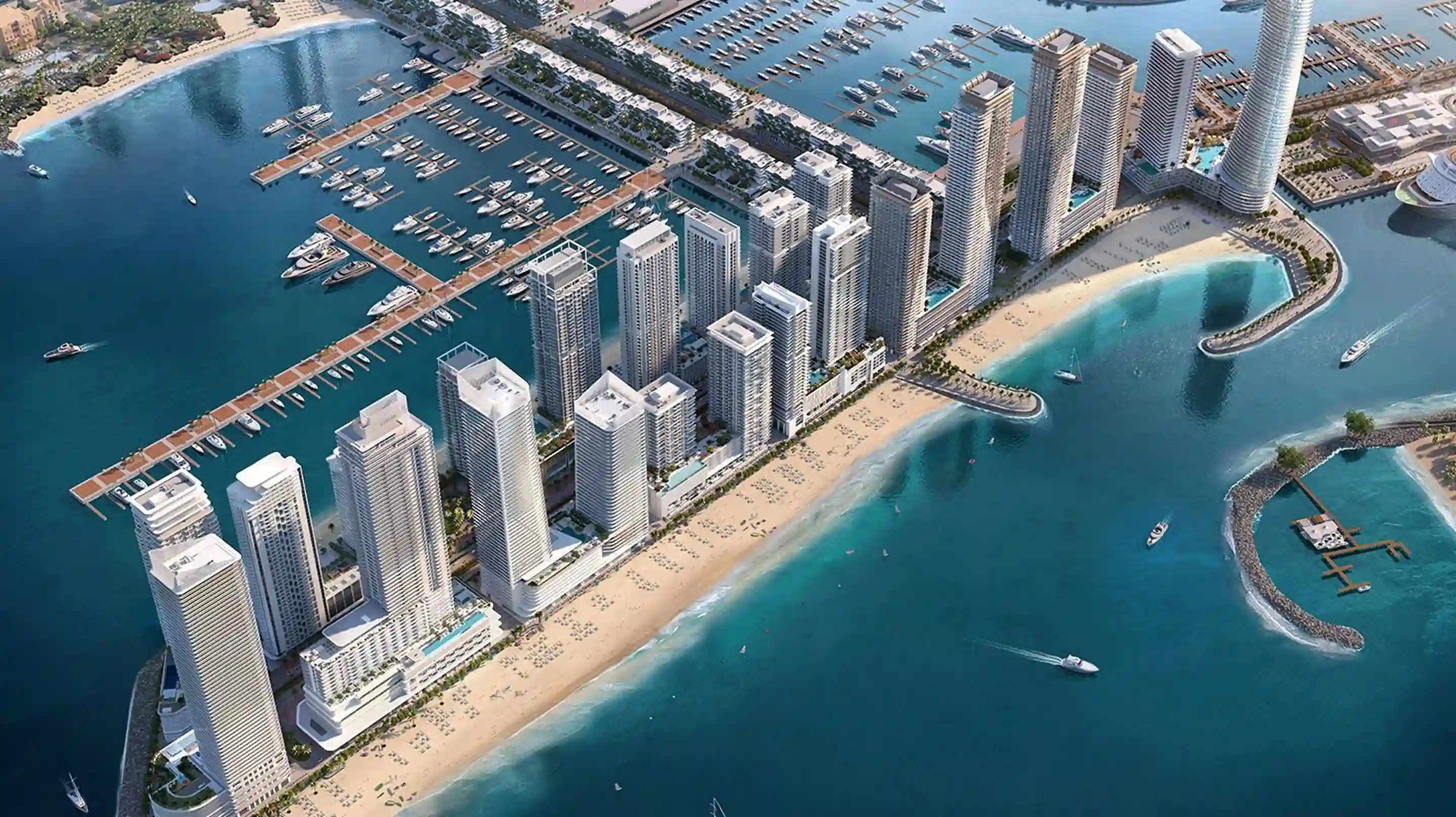
Emaar Beachfront includes the Grand Bleu tower, a collaboration with fashion house Elie Saab. The project offers designer apartments and penthouses
5. The Oasis. A large master community of over 92,000 m² with villas and mansions. It includes sports and recreation zones, a 54-kilometre cycling route and beaches, plus convenient access to key city destinations: Downtown, Burj Khalifa, Dubai Mall, DXB and Sheikh Zayed Road.
Why investors choose it:
Long-term rental demand — a gated villa community close to schools is typically attractive to families with children;
Premium status — residences offer spacious layouts, high-end finishes and private gardens. The master plan includes parks, a lagoon and fitness centres. Entry prices for mansions start from AED 15,800,000 ($4,300,000);
Transport access — proximity to D54 and a planned connection to Al Khail Road supports mobility and can help on resale.
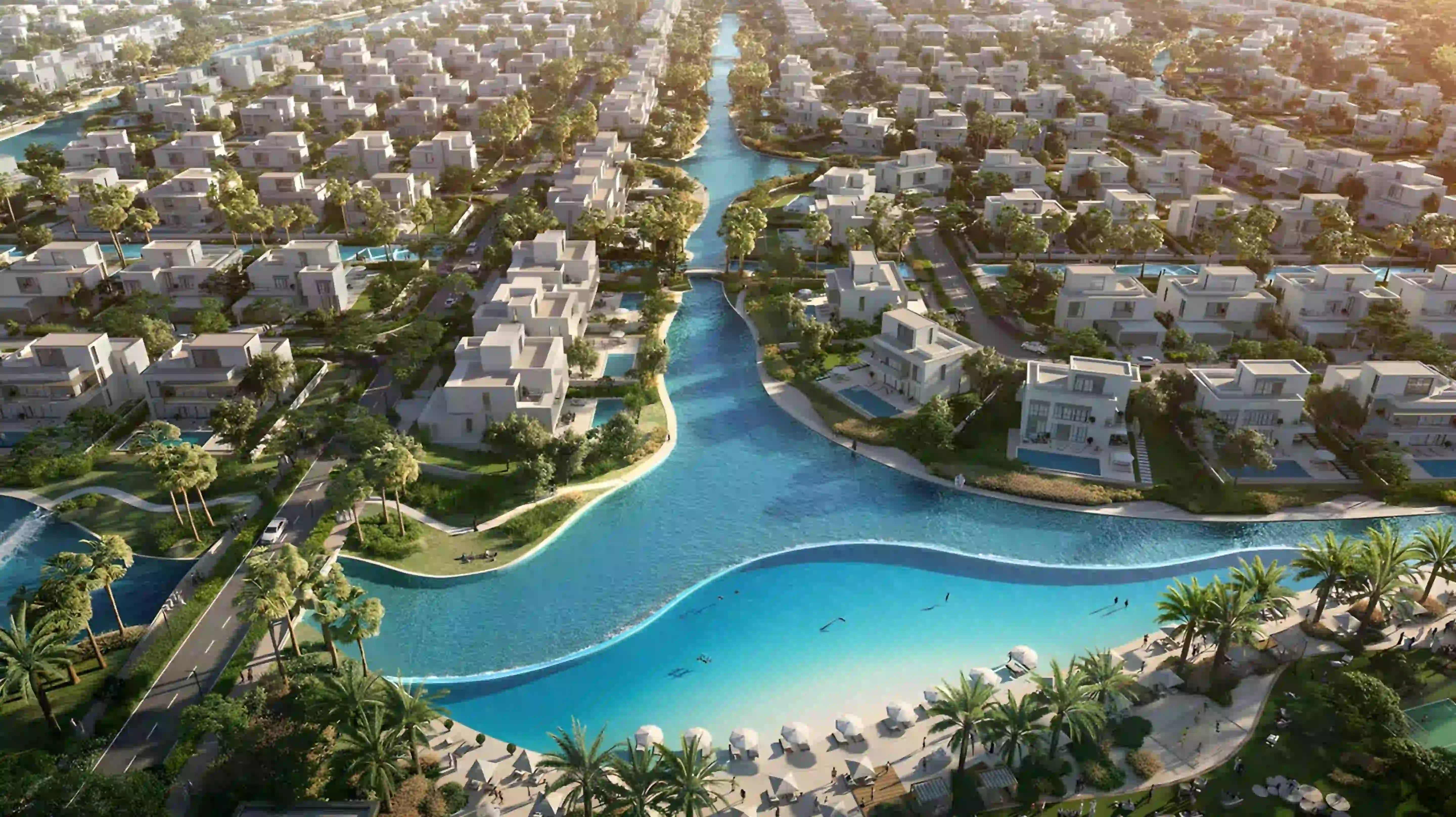
The Oasis master plan puts water at the centre of the district: lagoons, canals and beach zones are part of the environment
Aldar
5 master community locations by Aldar:
1. Saadiyat Cultural District. A cultural district in Abu Dhabi on Saadiyat Island. It includes the Louvre, the Manarat Al Saadiyat creative hub and a Berklee campus, plus major new museums: the Sheikh Zayed Museum, Guggenheim, Natural History Museum and teamLab Phenomena (digital art museum).
Why investors choose it:
A natural archipelago — unlike many man-made islands. Property is more expensive, but also more prestigious;
Mid- and low-rise development — communities combine villas, townhouses and apartment projects;
Many projects within walking distance of the sea — land supply is limited by the island’s geography.
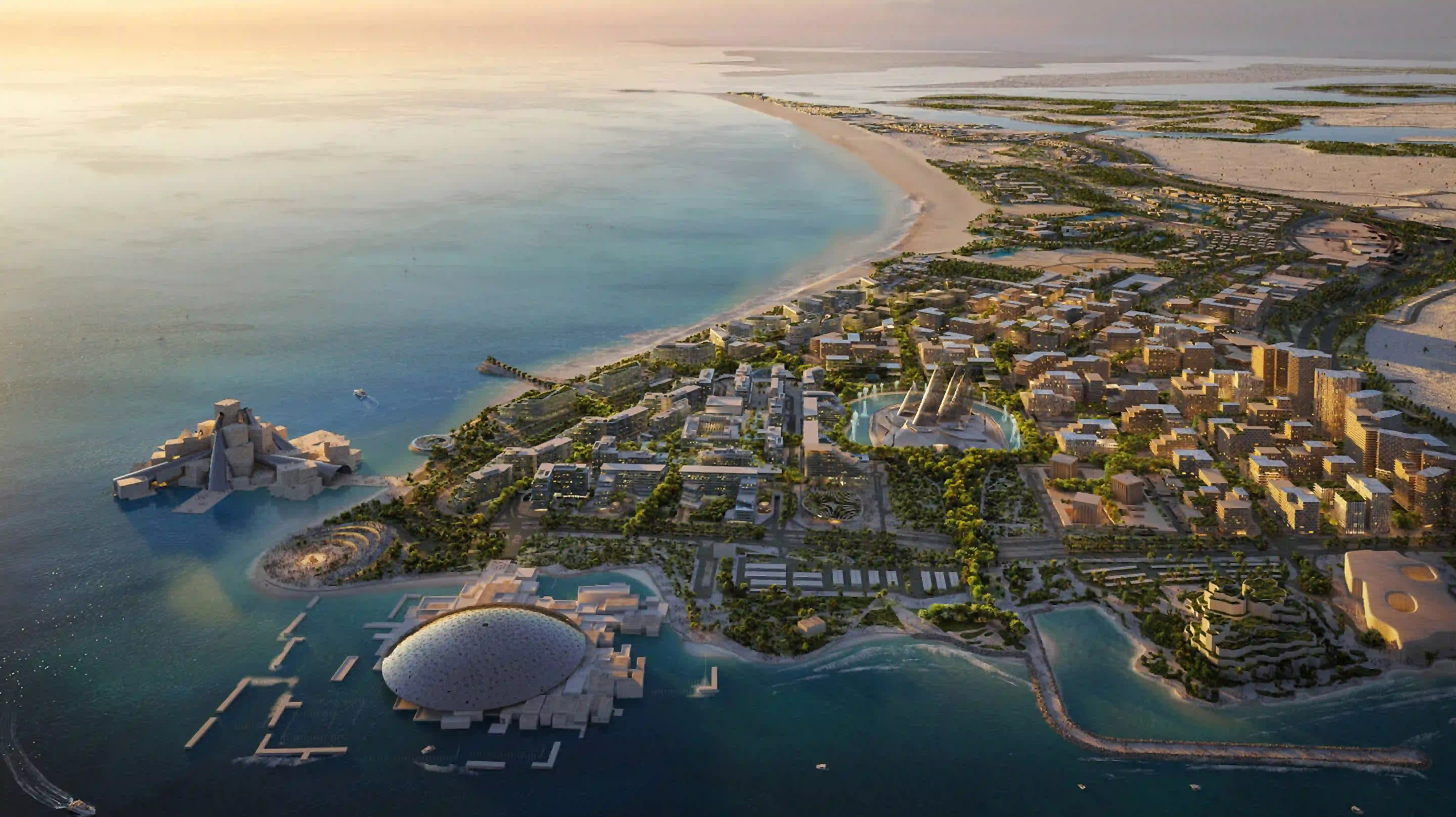
The cultural district covers ~10% of Saadiyat Island. The name “Saadiyat” translates as “Island of Happiness”. Water quality and proximity to protected areas mean dolphins are often seen near the shore
2. Saadiyat Lagoons. A villa community in Abu Dhabi on Saadiyat Island, next to mangroves. It sits within more than 900,000 m² of protected natural territory and close to Saadiyat’s educational and cultural infrastructure.
Why investors choose it:
A rare format for Abu Dhabi — private houses in a natural environment near a cultural cluster;
Stable long-term rental demand — popular with families with premium requirements;
High liquidity — driven by extensive green space and private garden areas that owners can customise.
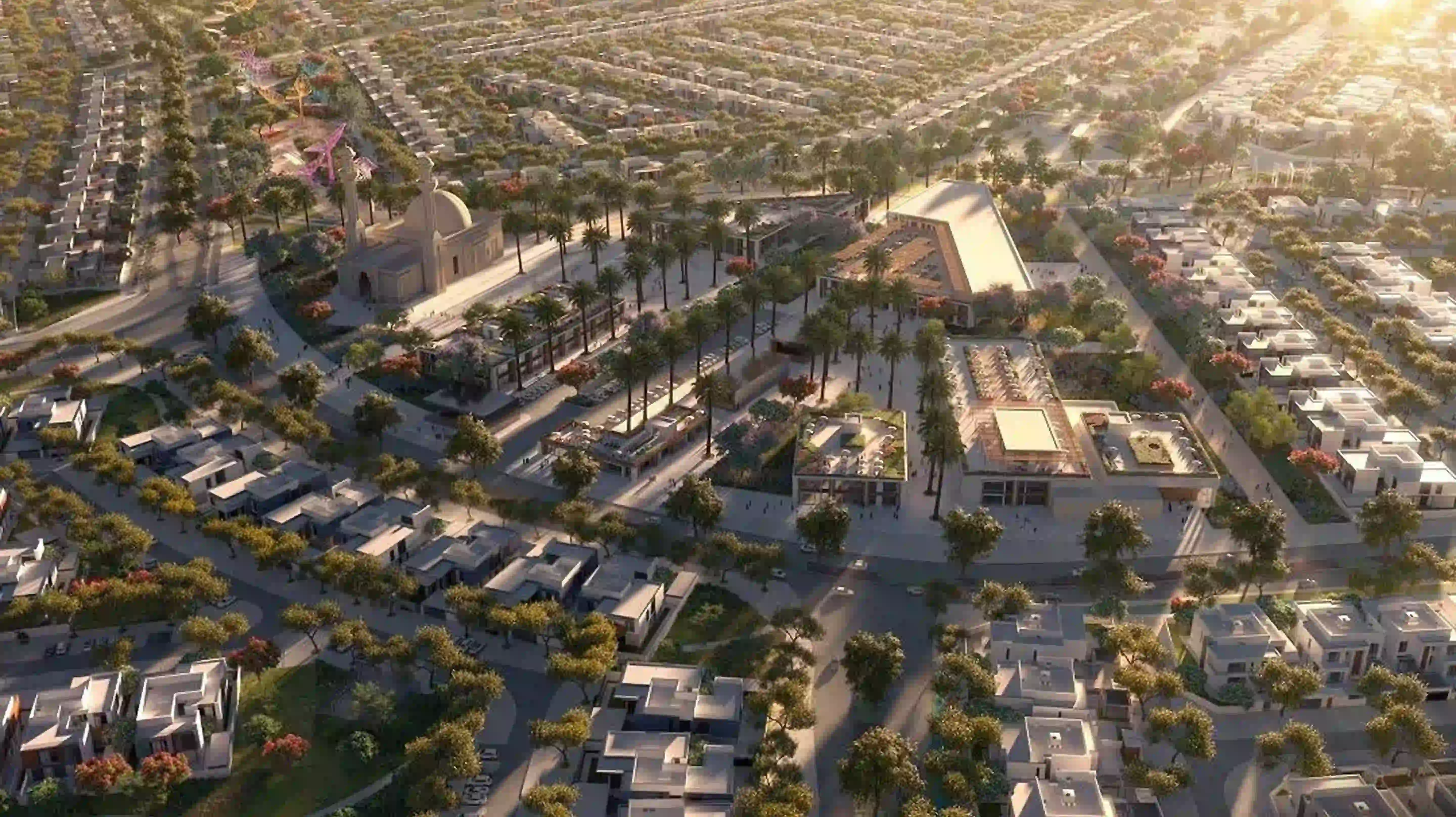
Saadiyat Lagoons offers 4–6-bedroom villas with views of mangroves and the lagoon
3. Fahid Island. A new island project in Abu Dhabi with leisure-led infrastructure: 11 kilometres of coastline, around 100,000 m² of beaches, 940,000 m² of green areas and a layout principle where any home is no more than 250 metres from a park or green space.
Why investors choose it:
Early-stage development — limited supply at launch can create scarcity and price growth potential as the area matures;
Short-term rental demand may emerge — 10 minutes to Yas Island (tourist and entertainment infrastructure, theme parks, Formula 1 track) and around 15 minutes to Saadiyat Island. This surrounding ecosystem can attract visitors;
Leisure infrastructure — a beach club and water activities are already in place. Restaurants, retail, a yacht club and expanded beach areas are planned, which can support rental demand.
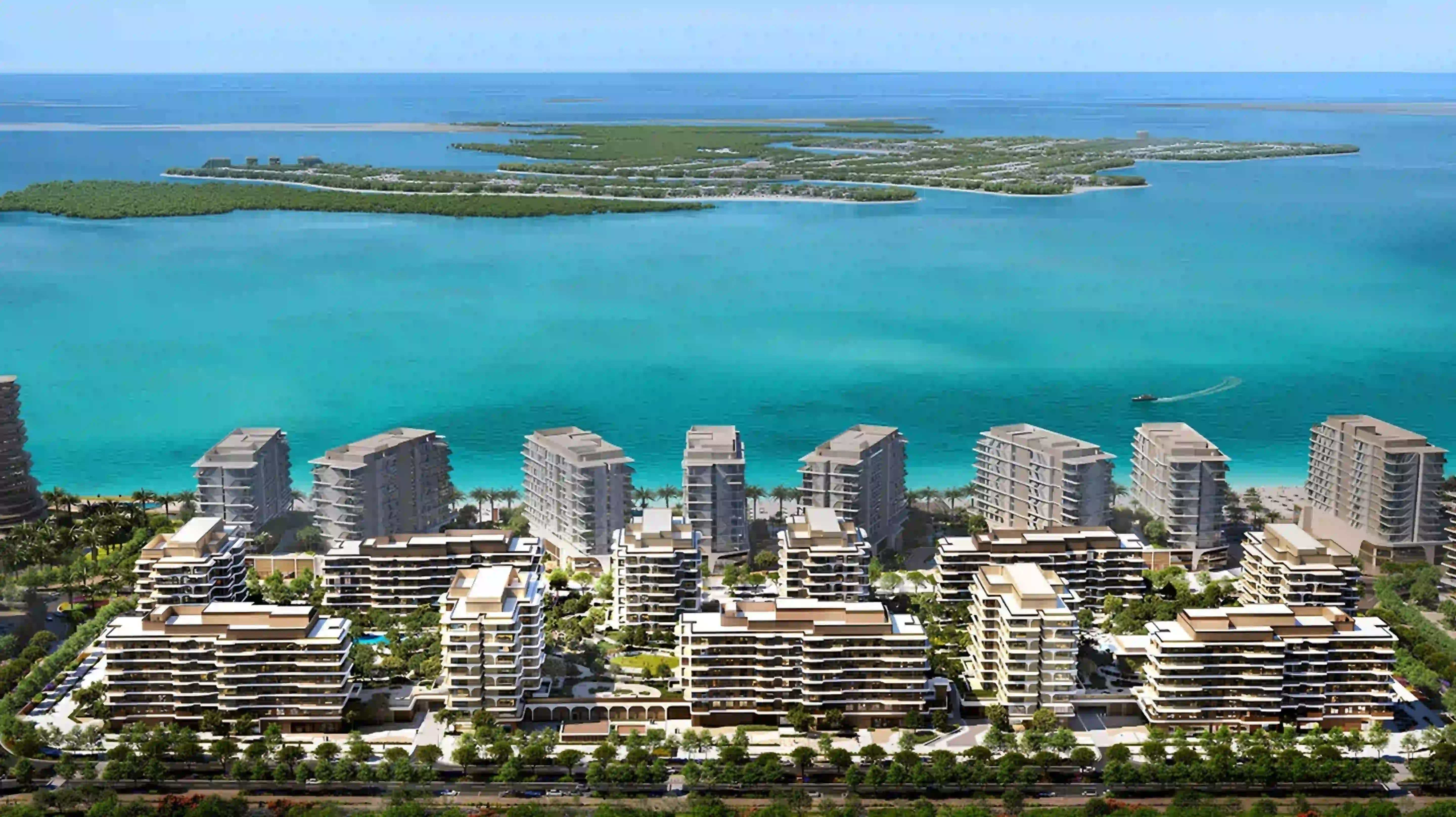
Fahid Island sits between two key destinations: tourist-led Yas Island and cultural Saadiyat Island
4. Athlon. A premium master community in Dubai within Dubailand, focused on walking and sports. It includes a central park, themed parks and more than 10 kilometres of cycling routes. The community is close to Global Village and has quick access to Sheikh Zayed Road and Emirates Road.
Why investors choose it:
Convenient access — proximity to major roads reduces commute times and supports tenant demand;
A rare concept — a focus on wellbeing: large parks, running tracks and sports facilities can increase interest from tenants;
Premium positioning — conceptual projects in Dubai’s premium segment have shown strong performance historically.
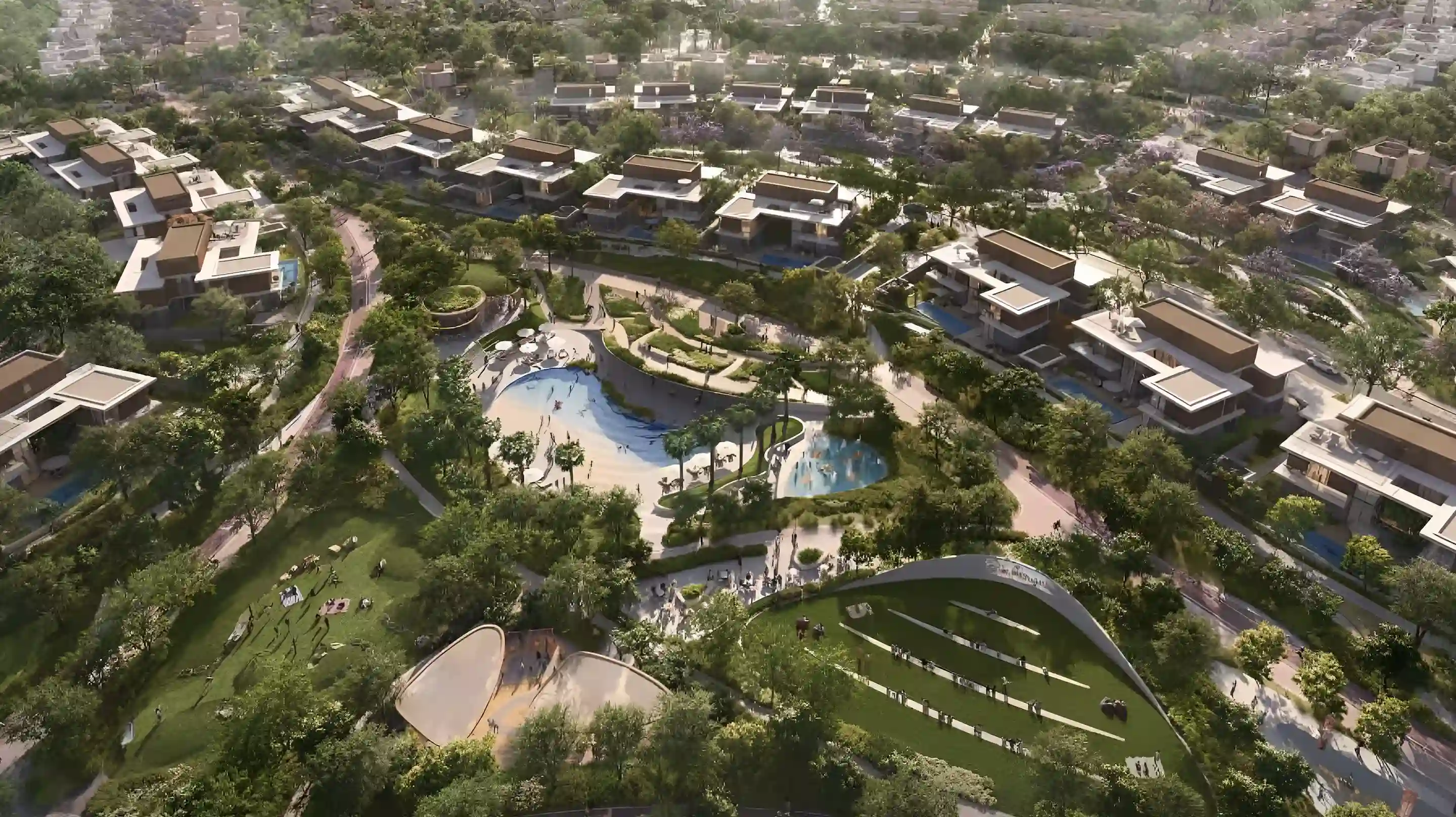
Athlon is positioned as Dubai’s first wellbeing-led community
5. Wilds. Another premium master community in Dubai by Aldar, with villas and mansions. As of 2026, it is under construction. The concept focuses on large green spaces. The master plan includes a school, learning spaces, gardens, fitness and play areas and sports grounds.
Why investors choose it:
Long-term rental demand is expected — a school within the district and larger unit sizes can attract family tenants;
Convenient access — proximity to Sheikh Zayed Road reduces travel time. Planned metro stations may further improve liveability;
A premium concept — the project combines luxury with sustainability and nature, a growing trend in Dubai.
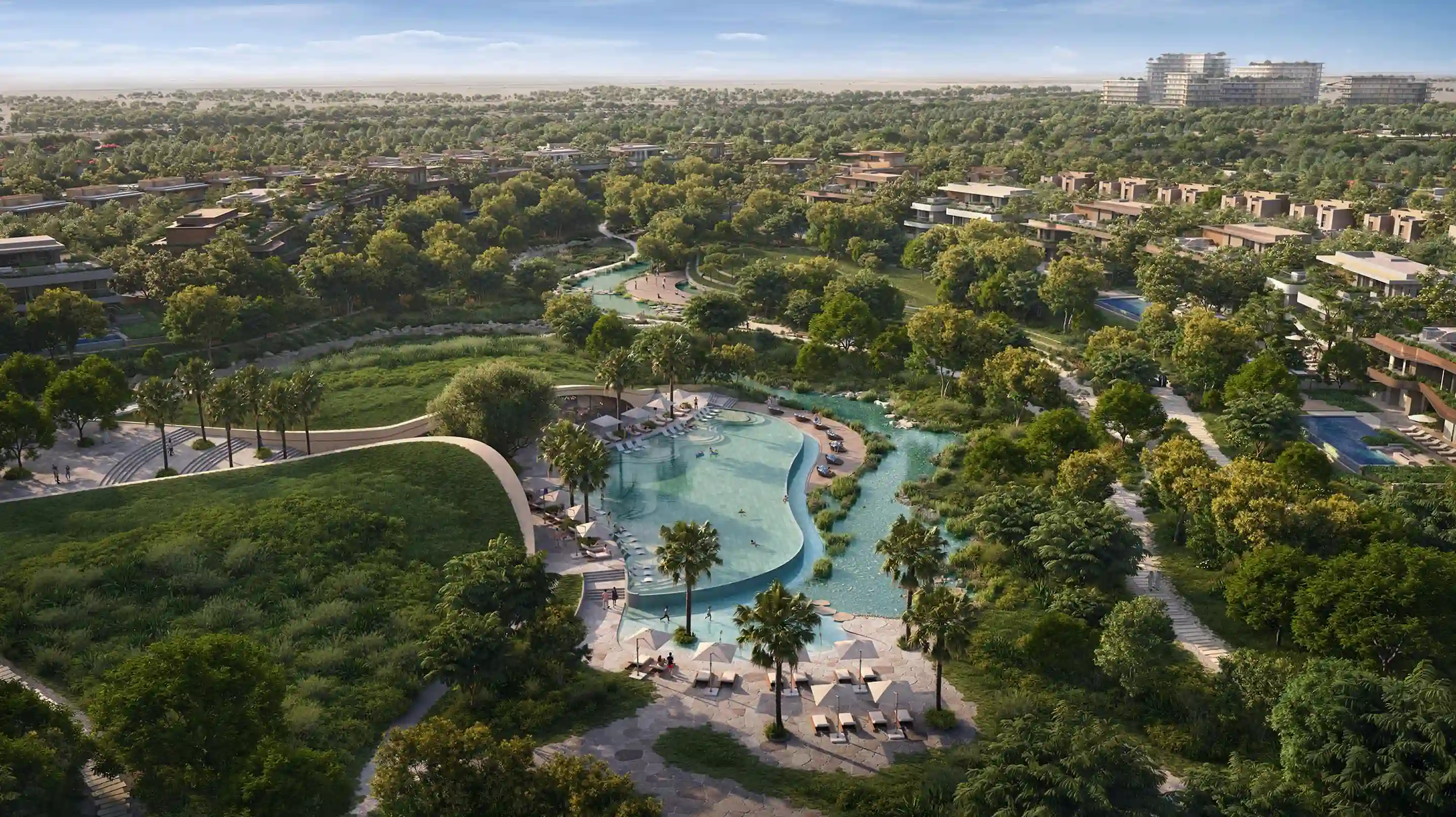
The community includes 3–5-bedroom villas and Moringa Mansions, a residential project of 38 ultra-luxury residences with LEED Gold certification
Product And Project Examples From Emaar And Aldar
The core difference is scale. Emaar master communities often include several high-rise residential projects with a large number of units per floor. Aldar typically builds mid-rise and low-rise projects. Because its developments are usually in premium locations, many units also have water views.
Because of these factors, buying an Aldar unit is often harder than buying from Emaar: launches can sell out within hours or even minutes.
Andrey Neginskiy
Real estate expert, CEO of Neginski
Demand for premium projects remains consistently high. Waiting lists are formed before sales open and priority is often given to investors whose agents work closely with the developer.
Neginski analysts negotiate better terms directly with developers. We work with over 300 developers, hear about off-market launches first, find rare units and negotiate discounts and purchase privileges.
Andrey Neginskiy
Real estate expert, CEO of Neginski
Emaar’s projects

Burj Khalifa is the world’s tallest building (828 metres, 163 floors). It is in Dubai and includes a hotel, residential apartments, offices and restaurants, as well as observation decks

Dubai Mall is the world’s largest shopping and entertainment centre. It has over 1,200 stores, hundreds of restaurants, an aquarium, an ice rink and other attractions

Dubai Marina and Downtown were also developed as master communities by Emaar. Later, other developers started delivering projects within them
-2.webp)
Grand Polo Club & Resort is a residential project in the UAE’s first polo-focused community. The project includes 3–5-bedroom villas with distinctive architecture and spacious layouts, overlooking green landscapes or polo fields
-2.webp)
Baystar is on the Marina Promenade waterfront. It includes two towers of 20 and 16 floors. Residences offer panoramic views of the Arabian Gulf, the yacht marina and the city
Aldar’s projects

Saadiyat Island is Abu Dhabi’s cultural district, home to some of the UAE’s leading institutions: the Louvre, the Sheikh Zayed Museum, Manarat Al Saadiyat and more
-2.webp)
Aldar Nobu is a premium project combining a hotel and a restaurant on Saadiyat Island in Abu Dhabi. At the initial stage, units were available only to a limited group of buyers. Remaining inventory was later released to the wider market

Fahid is a premium waterfront district in Abu Dhabi, between Yas and Saadiyat Islands. It is positioned as the world’s first residential project with Fitwel certification, focused on healthy environments and residents’ wellbeing
-2.webp)
Mandarin Oriental Residences is a two-building, 9-storey development with 1–5-bedroom apartments, including penthouses. It sits in Saadiyat’s cultural district, with views towards the Sheikh Zayed Museum
-2.webp)
Apartment interiors were designed by Japanese architect Koichi Takada. The residences sit on an island with direct beach access
How Emaar And Aldar Payment Plans Differ
In the UAE, you can buy property using a developer payment plan marketed as 0% interest. Terms depend on the developer. Emaar and Aldar typically offer structured instalment plans, although details may vary by project. Below are the most common formats.
Emaar payment plan:
20% — down payment;
70% — during construction;
10% — on handover.
Aldar payment plan:
5% — down payment;
55% — during construction;
40% — on handover.
From an investment perspective, Aldar’s instalment structure can be more flexible: an investor may pay around 50–60% of the unit price before handover and then resell with capital growth before the project is completed, if the developer’s rules allow assignment. This can reduce the amount of capital tied up until exit.
With Emaar, a similar scenario may be possible, but the upside can be smaller because the most advantageous resale point is often close to handover (before the final payment). At that point, an Aldar buyer may have paid only ~60% of the price, while an Emaar buyer may have paid ~80–90%.
A safe, transparent property
deal in Dubai with full support
Clear steps: documents, payments, risks,
and common pitfalls
Investment Appeal of Emaar And Aldar
The developers are difficult to compare head-to-head because they operate in different markets: Dubai is stable and mature, while Abu Dhabi is in a faster growth phase.
Investment outcomes depend on the specific project. To target stronger performance, you typically need an analyst’s view. They can shortlist options that align with your strategy: rental income or resale income, with a realistic exit strategy.
Below is Neginski’s internal analytics and portfolio case studies from projects by both developers.
Emaar
Around 70–90% of inventory is sold at launch. Price per square foot in Emaar’s key master communities (DCH, Dubai Hills, Mina Rashid, Beachfront) has increased by 48% to 85% over five years.
Andrey Neginskiy
Real estate expert, CEO of Neginski
Neginski case: 10% annual rental income on an apartment in Emaar Beachfront
In August 2022, an investor approached us with a goal to recover capital within 10 years. We shortlisted a 2-bedroom apartment (106 m²) in Emaar Beachfront, in the Beach Vista tower, for $806,000. The project was nearing completion.
In October, the building was handed over and the investor signed the first long-term rental contract at $68,000 per year, which is an 8% yield on the invested capital.
A year later, the unit’s market value was already 30% higher than the client’s purchase price. The investor increased the rent and signed a new contract at $86,000 per year, which is a 10% yield.
If rental growth stays stable, the payback period may decrease from 10 to 8 years.
Andrey Neginskiy
Real estate expert, CEO of Neginski
Aldar
Because Aldar projects typically have fewer units, 98% of apartments can be sold within the first days of sales. From 2024 to 2025, apartment prices in Aldar’s key communities (Saadiyat and Yas Island) increased by 10–14%, while villa prices rose by 22–28%.
Andrey Neginskiy
Real estate expert, CEO of Neginski
Neginski case: +77% on resale of an Aldar unit
In July 2023, a client came to us to buy off-plan on a developer payment plan, then resell before handover.
We shortlisted a 1-bedroom apartment (59 m²) in Manarat Living on Saadiyat Island. The total price was $365,000. The payment plan was 65/35, where 35% is paid closer to completion.
After 12 months, the client resold the unit to another buyer for US$450,000, including the remaining instalments under the payment plan. By that point, the investor had paid only $110,000.
Net profit on invested capital was $85,000, or 77%.
Andrey Neginskiy
Real estate expert, CEO of Neginski
Other Criteria to Compare Developers
There are a few more characteristics worth considering to understand each developer’s scale. We summarised them in the table below.
Comparison of Emaar and Aldar developers
| Criterion | Emaar | Aldar |
|---|---|---|
|
Hotel brands |
Yes: Palace, Vida, Address, Rove and others |
No, but collaborates with external brands such as Nobu Restaurant and Baccarat Hotel |
|
How many emirates they develop |
2 out of 7 |
3 out of 7 |
|
International operations |
Egypt, India, Saudi Arabia |
Operates in the UK through London Square |
|
Entry price point |
From AED 1,800,000 (~$490,000) for a 1-bedroom apartment |
From AED 2,000,000 (~$545,000) for a 1-bedroom apartment |
|
Projects per year |
~40 |
~10 |
About the Author & the Company
Andrey Neginskiy
Real estate expert, CEO of Neginski
This article was prepared by the Neginski team — an international real estate agency with teams in the UAE, Moscow and Phuket. We support clients at every stage, from clarifying goals and selecting a project to completing the purchase and managing the property.
We work with 300+ developers, get early access to off-market launches, source rare listings and negotiate discounts. More than 30% of our clients come back for repeat purchases. Learn more about us
Disclaimer
The information in this article is for general guidance only and does not constitute individual legal, investment or immigration advice. Property purchase terms, instalment plans, mortgage financing, rental rules and UAE residency visa options depend on the specific project, developer, bank, property status and the buyer’s individual profile.
UAE laws and regulatory requirements may change. Before making any decisions, we recommend getting personalised advice and confirming the latest terms with the Dubai Land Department (DLD), the developer, the bank or licenced advisers.
Sources
This article is based on publicly available data, Neginski’s analysis and the team’s hands-on experience.
Links:
Dubai property market posts highest-ever January sales
UAE's Abu Dhabi sets out measures to help business get away from oil | Reuters
Dubai Land Department — Dubai REST
Emaar reports record 2025 with highest sales, revenue and profit | Gulf News
FAQ
-
Start with scale, delivery history and the quality and timing of completed projects. As a reference point, Emaar and Aldar are government-backed developers. Emaar delivered Burj Khalifa and Dubai Mall. Aldar is known for premium locations in Abu Dhabi (such as Saadiyat and Fahid) and a more private, limited-supply product.
What to check before you pay a booking fee:
• whether the project has an escrow account;
• how many projects the developer has completed and their current condition;
• whether there is a valid construction permit. -
A brand can be an advantage because it often comes with an experienced property management company and an existing client base that can attract tenants. But higher occupancy is usually driven by location: proximity to water, the metro, shopping centres and other destinations that matter to tourists.
-
• DLD fee (Dubai Land Department fee) — 4% in Dubai and 2% in Abu Dhabi — 4% in Dubai and 2% in Abu Dhabi;
• apartment admin fee — $800–1,500, depending on the developer;
• agent fee — 2%, typically on the secondary market only.
-
• down payment and the developer payment plan schedule;
• what counts as late payment and which penalties apply;
• whether assignment is allowed and on what terms;
• which account payments go to and what proof of payment you receive.
-
If you buy for a visa, start from the unit price. To get a 2-year UAE residency visa, you need a property from $205,000. For a 10-year Golden Visa, from $545,000.
Investment purchases start with defining your strategy, choosing a location and project that fits the likely buyer or tenant profile, then calculating yield (as an estimate), liquidity and exit options.
-
• whether the project is registered with the regulator and an escrow account is in place;
• what the instalment plan is and which construction milestones payments are tied to;
• whether assignment is allowed before handover and what % must be paid first;
• handover timelines;
• what is included in the unit specification, what may change (layout, finishes) and how this is recorded in the SPA.