How to Get a UAE Residency Visa in Dubai Through Property Investment in 2026
By purchasing property in Dubai, a foreign buyer may be eligible for a UAE residency visa. This can allow long-term residence in the UAE with access to opening bank accounts, renting property, obtaining a driving licence and using medical services. In this guide, we explain the deal requirements and the documents needed to apply for a residency visa through property investment.

Andrey Neginskiy
Real estate expert, CEO of Neginski
At a Glance
In Dubai, a property investor can apply for residency under one of three programmes:
a 2-year UAE residency visa when purchasing property from AED 750,000 (~$205,000)
a 10-year Golden Visa when purchasing property from AED 2,000,000 (~$545,000)
a 5-year retirement visa when investing from AED 1,000,000 (~$272,000)
When applying for the 2-year visa, staying outside the UAE for more than 180 consecutive days may lead to your status being cancelled. The Golden Visa allows holders to stay outside the UAE for longernth period without losing residency. For other residence visas, the general six-month rule may still apply.
To apply, you typically need: a Title Deed for a ready/completed property or an Oqood certificate for an off-plan property, the SPA (Sales and Purchase Agreement) and, if you used a mortgage or a developer payment plan, proof of the paid amount and a No Objection Certificate (NOC) from the bank or the developer. The process includes registering ownership with the Dubai Land Department (DLD), obtaining a police clearance certificate, completing a Medical Fitness Test and applying for an Emirates ID after the visa is issued.
In your budget, consider not only the property price but also related costs: the medical test, the police clearance certificate, the NOC, visa fees and the Emirates ID card fee. You may be refused if the required paid amount is not confirmed at the time of application (for a mortgage/developer payment plan) or if the chosen property does not meet the programme criteria.
Types of Visas for Purchasing Real Estate in Dubai
A residency visa through investment allows the owner to obtain an Emirates ID, an ID card with your personal details. It is widely treated as the main identity document in Dubai and is required for long stays in the emirate.
All visa types can allow you to:
run a business in the country;
become a tax resident in the UAE (subject to your circumstances; tax rules depend on your personal status and your home country’s requirements);
open a bank account in the UAE (subject to each bank’s compliance checks and internal policies);
take out a mortgage or a loan in the UAE;
arrange medical insurance;
use your UAE residency status as supporting documentation in some visa applications (requirements depend on the destination country and your personal profile);
rent a home on a long-term rental basis;
obtain a driving licence and buy a car.
Below, we cover three visa types a property investor in Dubai may obtain.
2-Year UAE Residency Visa
Issued for the investor and, if needed, for family members. Holders of a 2-year residency visa can usually stay outside the UAE for no more than 180 consecutive days, otherwise it may be cancelled.
Property requirements:
ready/completed residential property only;
price from AED 750,000 (~$205,000);
if the property is mortgaged or on a developer payment plan, the authorities may request proof of value and payment status; requirements can vary by case and by the issuing authority.
Golden Visa
Valid for 10 years and can be issued for the investor, their family members and domestic staff. There is no restriction on how long the owner can stay outside the UAE.
Property requirements:
ready/completed or off-plan residential or commercial property;
price from AED 2,000,000 (~$545,000);
if using a developer payment plan or mortgage, 20% of the purchase price must already be paid.
Retirement Visa for investors
Issued to people over 55 who can prove they are retired. It is valid for 5 years and living in the UAE is not mandatory.
Property requirements:
ready/completed residential property only;
price from AED 1,000,000 (~$272,000);
if the property is mortgaged, you may need a bank letter confirming that at least AED 1,000,000 has been paid (requirements depend on the programme rules).
Andrey Neginskiy
Real estate expert, CEO of Neginski
Neginski case: avoid a secondary-market purchase and save $100,000 before relocation
In 2022, an investor from the CIS contacted us for end-to-end support with a property purchase in Dubai, with the goal of securing a UAE residency visa (including the Golden Visa if eligible) and relocating with his wife.
Because the relocation timeline was tight, the client initially chose a ready/completed property: a three-bedroom apartment in Downtown Dubai priced at $980,000. After such a purchase, relocation expenses would have put significant pressure on the family budget.
A Neginski analyst suggested an alternative: a similar apartment in a nearby development that was close to completion, priced at $880,000. The handover was expected within the next quarter. This meant waiting slightly longer, but the client agreed because the lower price made the move financially easier.
The building was completed 1.5 months later. The visa process for the client and his wife took another two weeks, and the family relocated shortly after receiving their Emirates ID.
Andrey Neginskiy
Real estate expert, CEO of Neginski
Which Documents Are Needed for a Dubai Investor Visa
The required set of documents depends on the visa type, the property status (ready/completed or off-plan) and the payment method (full payment, developer payment plan or mortgage). Based on Neginski’s experience, delays most often happen for three reasons:
the property value is recorded incorrectly in the ownership document for your scenario (Title Deed vs Oqood);
there is no correct proof of the paid amount for a mortgage or developer payment plan;
the authority requires the document in Arabic but the owner provides it in Russian or English.
In the table below, we outline which documents are typically required to apply for a UAE residency visa.
| Criterion | Residency Visa | Golden Visa | Retirement Visa |
|---|---|---|---|
|
Property documents |
1. Title Deed — proof of ownership; |
1. Oqood certificate for an off-plan property or a Title Deed for a ready/completed property (proof of ownership); |
1. Title Deed for a property priced at least AED 1,000,000 or AED 505,000 plus a bank statement showing the same amount; |
|
Identity documents |
1. International passport; |
1. International passport; |
1. International passport; |
|
Medical documents |
1. Medical Fitness Test results confirming no infectious diseases (HIV and tuberculosis); |
1. Medical Fitness Test results confirming no infectious diseases (HIV and tuberculosis); |
1. Medical Fitness Test results confirming no infectious diseases (HIV and tuberculosis); |
How Much Money Do You Need to Get a Residency Visa in Dubai
When buying property in Dubai, it is important to consider not only the purchase price but also related expenses for the visa application. Below are approximate costs.
Costs when applying for a Dubai visa:
Medical Fitness Test — AED 750 ($205);
Police clearance certificate — AED 220 ($60);
Visa fees for a spouse and children — on average AED 7,000 ($1,900);
NOC (No Objection Certificate) — AED 515–5,000 ($140–$1,360) depending on the developer or bank.
Depending on the visa type, two cost items will differ: the visa fee and the Emirates ID fee.
Visa fee:
2-year UAE residency visa — AED 10,213 ($2,780);
Golden Visa — AED 9,885 ($2,692);
Retirement visa — AED 2,230 ($608).
Emirates ID fee:
2 years — AED 240 ($66);
5 years — AED 550 ($150);10 years — AED 1,070 ($292).
The final amount depends on whether you also apply for family visas, how you pay for the property and which services you delegate (document translation, notarisation, assistance with submitting the application).
Buy property in Dubai remotely
Video tours. Clear terms. A step-by-step plan.
End-to-end online

Six Steps to Obtain a Visa Through Property Purchase in Dubai
Neginski’s client care team helps clients obtain a UAE residency visa through property investment and collect documents to open a UAE bank account. Our analysts support you throughout the transaction, from selecting a property to handover and key collection.
Step 1. Buy property
For a 2-year or 5-year visa, we recommend choosing a ready/completed property or an off-plan property at the final construction stages, as ready/completed status is the key criterion for this type of residency.
You can pay in full, with a mortgage or via a developer payment plan. In the last two cases, you need to make a down payment in the amount required by the programme and obtain confirmation from the bank or developer.
When buying an off-plan property, payments are typically transferred to the project’s escrow account. A real estate regulator monitors each project and releases funds in tranches as construction progresses. The developer receives the full amount only after handover, but you can usually request proof of payment immediately after the transfer.
Step 2. Register ownership
The property is registered with the Dubai Land Department (DLD). You then receive a Title Deed (if the property is completed) or an Oqood certificate (if it is off-plan). This is the official document confirming ownership.
Step 3. Prepare documents
First, you apply to the Dubai Land Department (DLD) and provide your passport, your ownership document and your current visa (if any). DLD issues a recommendation letter that you need to submit to Dubai Police to obtain a police clearance certificate.
If your residency goal is to run a business in the UAE, at this stage you will also need to obtain a business licence with the Dubai Economic Department (DED).
After the licence is issued, you apply to the Federal Authority for Identity and Citizenship (ICP) or the General Directorate of Residency and Foreigners Affairs (GDRFA), in person or online, and submit your UAE residency visa application.
Step 4. Medical Fitness Test
A mandatory part of the process is the Medical Fitness Test. The check includes a blood test and a chest X-ray. Based on the results, you receive a medical clearance.
Step 5. Receive the visa and apply for an Emirates ID
After the medical test and submission of your application, you receive a UAE residency visa. From that point, you have official resident status. However, to live comfortably in Dubai, you will also need an Emirates ID, without which you cannot open a bank account, arrange insurance, rent property or obtain a driving licence.
To obtain an Emirates ID, you first need to receive your visa through GDRFA and then submit an online application. You will be asked to provide your passport, visa and medical documents and to complete biometrics (photo and fingerprints).
Step 6. Receive the Emirates ID
An Emirates ID is typically ready within several working days up to 1–2 weeks after the medical test and document submission. Timeframes depend on your specific situation. Once the card is issued, you will receive an SMS notification and can collect it at the nearest Emirates Post branch.

You can apply Residency Visa even during Ramadan, a month-long Muslim holiday when government offices operate on reduced hours
How Long a Dubai Residency Visa Is Valid and How to Renew It
A UAE residency visa is issued for 2, 5 or 10 years, depending on the type. To renew it, you need to confirm that you still meet the requirements:
you own property at the required value;
you maintain income (if it is required);
you have not stayed outside the country longer than the permitted period (for example, no more than 180 consecutive days for the 2-year visa).
Where to renew:
in Dubai, applicants often use GDRFA channels and Amer centres;
in other emirates, use the ICP platform (Federal Authority for Identity, Citizenship, Customs and Port Security).
It is recommended to apply 1–2 months before your current visa expires. You will need to submit documents again, provide your passport and photo, complete a medical test and pay the fees.
Buy a backup home abroad for
your family
We’ll shortlist locations with schools, healthcare, and
everyday infrastructure for a smooth move whenever
you need it
Common Mistakes Investors Make When Applying for a Dubai Property Visa
Below are mistakes that most often either prevent you from getting a visa or lead to cancellation after it has been issued. In most cases, you can avoid the issue by checking the visa requirements against your purchase scenario.
Ignoring visa validity rules
If a holder of a 2-year investor visa stays outside the UAE longer than the allowed period (typically more than 180 consecutive days), the visa may be cancelled. This restriction does not apply to the Golden Visa or the retirement visa.
How to prevent it:
If an investor plans to spend a long period outside the UAE, they should consider a residency option without this restriction, such as the Golden Visa. Neginski analysts help select a property that meets the relevant visa criteria and a comfortable payment structure.
Selling the property without maintaining the basis for the visa
The visa is tied to a specific property and a confirmed investment amount. If an investor sells the property used to obtain the visa and does not own another property that meets the programme requirements (by value, status and documentation), residency may be cancelled.
Situations that most often create this risk:
the investor sold the only property that was the basis for the visa and did not register a new qualifying property before closing;
the new property is registered to a spouse or relative rather than the investor;
when replacing the property, the documents on value and payments under a mortgage or developer payment plan do not match reality and the investor cannot prove the required investment amount.
How to prevent it:
First buy and register a new property that meets the visa criteria and only then sell the previous one. This helps preserve a lawful basis for residency.
Insufficient paid amount under a developer payment plan or mortgage when applying
For example, if a property is purchased for AED 750,000 (~$205,000) on a developer payment plan but the paid amount is below this threshold at the time of application, the visa will be refused.
How to prevent it:
before signing, check not only the ‘property price threshold’ but the ‘paid amount threshold on the application date’;
if the required payment does not fit your timeline, either postpone applying or consider another property or payment terms.
Choosing a property that does not meet the visa requirements
The most common example is attempting to apply for a 2-year visa using an off-plan property that does not meet the ready/completed criterion. The application will be refused until the building is fully completed.
How to prevent it:
If you need a visa as quickly as possible, it is safer to choose a ready/completed property or one at the final construction stage.
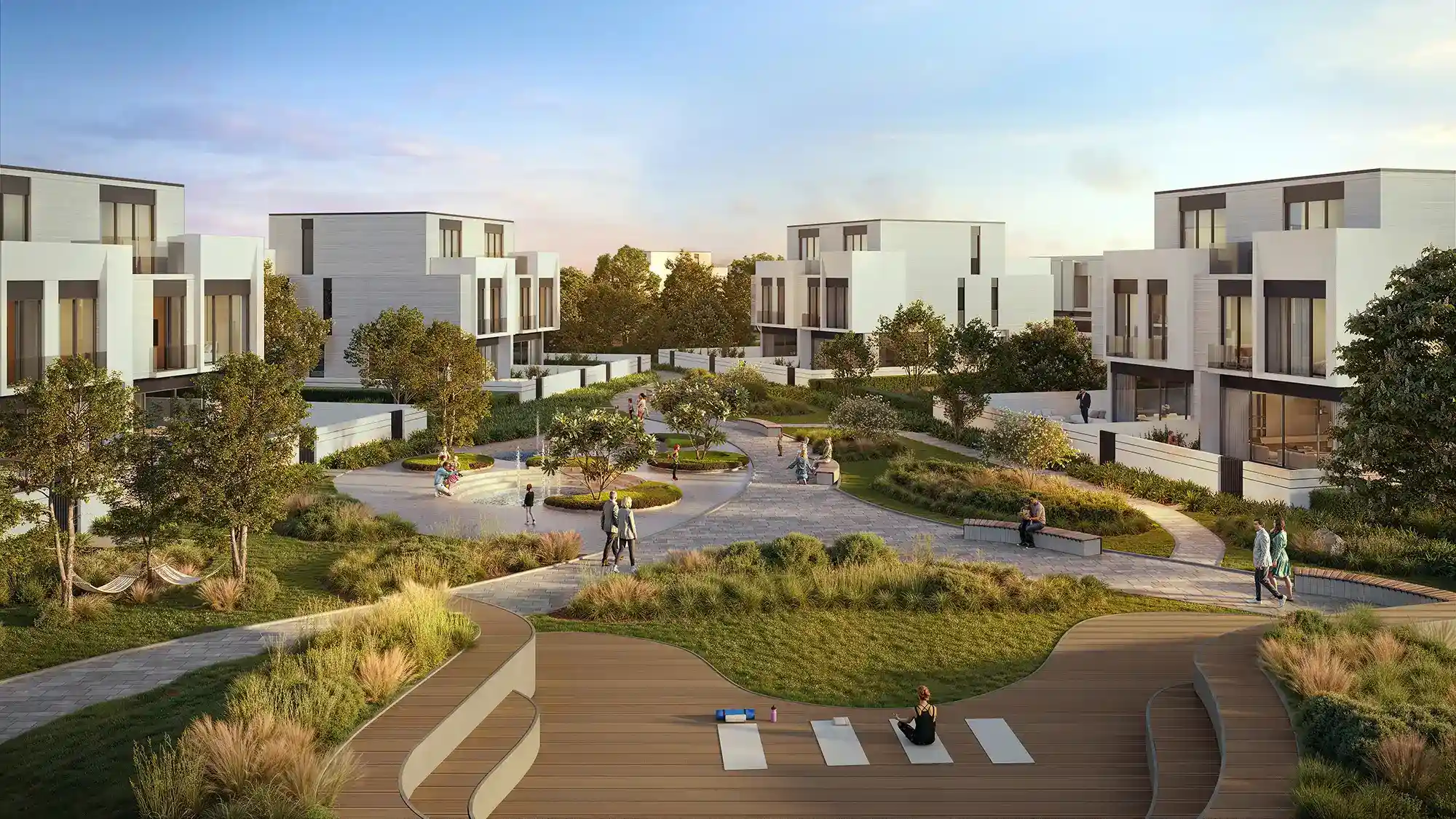
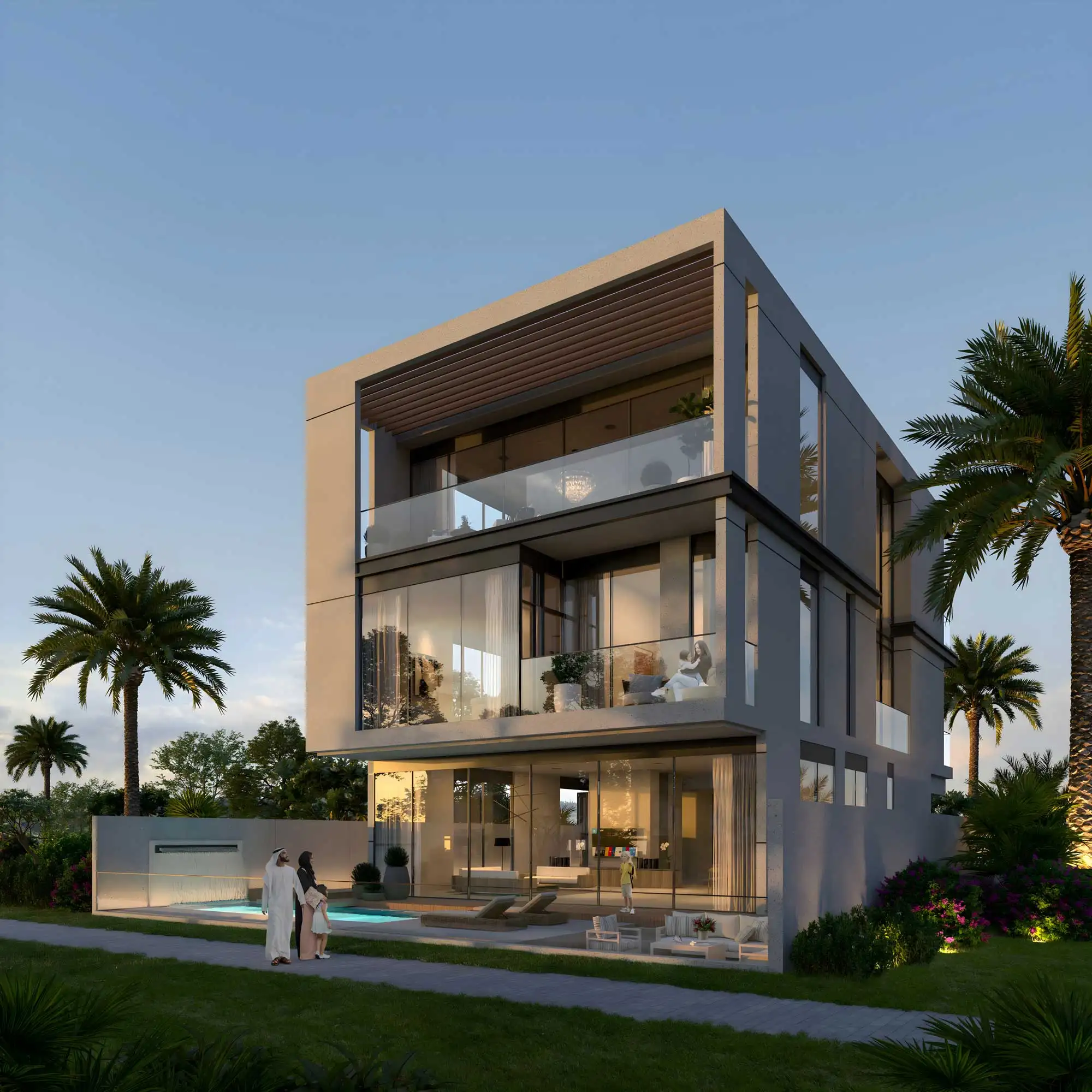
D Villas
Set on a site adjacent to the golf course
Terra JGE
With private gyms in a golf community

Ghaf Woods
Set within a green community with a private garden
and eco-farm
About the Author & the Company
Andrey Neginskiy
Real estate expert, CEO of Neginski
This article was prepared by the Neginski team — an international real estate agency with teams in the UAE, Moscow and Phuket. We support clients at every stage, from clarifying goals and selecting a project to completing the purchase and managing the property.
We work with 300+ developers, get early access to off-market launches, source rare listings and negotiate discounts. More than 30% of our clients come back for repeat purchases. Learn more about us
Disclaimer
The information in this article is for general guidance only and does not constitute individual legal, investment or immigration advice. Property purchase terms, instalment plans, mortgage financing, rental rules and UAE residency visa options depend on the specific project, developer, bank, property status and the buyer’s individual profile.
UAE laws and regulatory requirements may change. Before making any decisions, we recommend getting personalised advice and confirming the latest terms with the Dubai Land Department (DLD), the developer, the bank or licenced advisors.
Sources
This article is based on publicly available data, Neginski’s analysis and the team’s hands-on experience.
Links:
Investor Visa in Dubai | 10 Years Residence Visa for Property Owners | DLD Cube
Investor Visa in Dubai | 2 Years Residence Visa for Property Owners | DLD Cube
Apply for 5 Year Retirement Visa In UAE | Dubai 5 Years Dependent Visa
Law No. (8) of 2007 Concerning Escrow Accounts for Real Estate Development in the Emirate of Dubai
Golden Residency - Federal Authority for Identity, Citizenship, Customs & Port Security
Dubai Land Department - Investor Residence Application (Taskeen)
FAQ
-
In Dubai, you may obtain a UAE residency visa by purchasing property from AED 750,000 (~$205,000) and above.
Purchase terms depend on:
the visa validity period you need;
your readiness to follow visa restrictions;
your purchase and residency goals.
-
The minimum threshold for a 2-year visa starts from AED 750,000 (~$205,000). For the Golden Visa, the benchmark is from AED 2,000,000 (~$545,000). The investment amount can include multiple properties.
-
A standard UAE residency visa typically requires a lower investment budget, is valid for 2 years and usually involves more requirements for the property and stay conditions. The Golden Visa is issued for 10 years, allows you to stay outside the UAE for an unlimited period and often allows broader family sponsorship options but has a higher investment threshold.
-
You can buy property with a mortgage to obtain a UAE residency visa in Dubai, but by the application date you must have paid the required amount: AED 750,000 (~$205,000) for the 2-year visa and AED 2,000,000 (~$545,000) for the 10-year visa.
-
You can buy several properties to apply for a Dubai visa if their combined value and readiness status meet the requirements of the chosen visa.
-
No, but you must follow the rules of the specific visa. For the 2-year visa, there is a limit on how long you can stay outside the UAE (up to 180 consecutive days). The Golden Visa has no restriction on time spent outside the country.
-
If you sell the property that was the basis for your visa and do not replace it with a new qualifying property, your status may be cancelled. It is safer to first buy and register a new qualifying property and only then sell the old one to maintain the basis.
-
Yes, in most programmes you can apply for visas for a spouse and children if you meet the requirements and provide supporting documents (including a marriage certificate and, if needed, documents for children). Under the Golden Visa, family sponsorship options are usually broader.
-
On average, the standard processing time for a UAE residency visa in Dubai is up to 14 working days after you collect and submit all documents and complete the medical test.
-
You can lose the visa if you breach the rules on time spent outside the country, sell the property without maintaining a qualifying basis or fail to meet renewal conditions (for example, if the confirmed paid amount under a mortgage/developer payment plan is insufficient).