Why UAE Real Estate Stays Strong – No Matter What’s Happening in the World
Neginski analysts explain what is happening in the UAE in March 2026 and how this may affect the country’s investment security and appeal.

Andrey Neginskiy
Real estate expert, CEO of Neginski
At a Glance
Since 28 February 2026, the UAE has been facing an adverse geopolitical environment. This has left many investors wondering whether they should withdraw capital from property and what may happen to the market.
Based on previous military conflicts, property prices often rise once a crisis is over, while trophy and prime property tend to be especially resilient because demand in this segment does not fall.
The Dubai Financial Market index reacted first. It includes the shares of developers and property-related companies. The market is supported by several factors: a very low share of mortgage-backed transactions, a steady inflow of expats, government support measures and limited supply in the premium segment.
The current situation does not cancel out investment opportunities in the Emirates. It does, however, raise the bar for risk management. Neginski analysts recommend staying calm and avoiding rushed decisions.
A Quick Brief for Investors: What Is Already Clear About the UAE Property Market
On 28 February 2026, Iran’s leader was killed in a coordinated US-Israeli strike. In response, Iran launched a large-scale attack on American bases in the Gulf, involving more than 900 missiles and drones. Air defence systems intercepted almost all of them, repelling up to 94% of strikes on the first day. As of 17 March, Dubai’s airspace has periodically remained closed due to drone and missile threats.
As the Emirates remain one of the world’s most popular destinations for property investors, many are now concerned about whether they should pull capital out of the country or continue investing there.
Neginski analysts advise caution — and here’s why:
1. The market is still active. The segment most affected by geopolitical tensions is tourism: airspace closures disrupt travel, and tourists are less willing to visit a country seen as unsafe. The residential sector, however, remains stable. UAE citizens and expats continue to renew their leases and buy property, although buyers are now taking longer to make decisions.
2. The UAE’s air defence systems are performing effectively. The country’s military is intercepting 95–98% of targets. For comparison, according to the IDF, Israel intercepted only 80–90% of attacks in 2025. This means the risk of a projectile hitting a residential building remains minimal.
3. Historical experience does not support fears of a market collapse. Similar periods of economic turbulence have occurred in other countries and often created opportunities. In London, for example, the property sector withstood the political shock of Brexit in 2016: according to the UK House Price Index, property prices did not fall but rose by 32% between July 2016 and May 2022.
What Has Happened to the UAE Property Market Over the Past Two Weeks
At the moment, the UAE stock market and property market are showing different dynamics. The stock market traditionally reacts faster to geopolitical stress, while residential property remains a more stable asset class. Below, we explain why this gap appears and what it says about current market conditions.
Stock Market
Important: the stock market reflects the performance of listed developers’ shares, not a direct index of property price growth or decline. This can be tracked through the DFMRE Index. Since the start of hostilities, its movement has indeed been negative.
Similar corrections have occurred before, following periods of rapid growth. The index is now at roughly the same level as several months ago, which may suggest profit-taking and an exit by some short-term investors. These moves do not necessarily reflect a fundamental change in the property market. More often, they show how financial markets react to risk and expectations.

Price growth charts published by DXB show that there is some relationship with the index, but it is indirect
Developers share indices and property prices can move in different directions and often do so with a time lag.

Sales volumes are also rising despite fluctuations in the DFMRE Index. Source: DXB
Conclusion: the stock market may reflect the geopolitical climate in the UAE, but it does not directly drive property prices and affects them only to a limited extent.
Number of property transactions
A geopolitical shock tends to reduce buyer activity in the short term, but it does not trigger a structural collapse of the market.
Price dynamics in the UAE have remained broadly stable and have shown little dependence on external global economic shocks. Over the past three years, the emirate’s property market has lived through the Israel-Hamas war, political instability in Europe and the cryptocurrency market decline, yet property prices have continued to rise.
Below is a comparison of two stress periods for the UAE market: the current situation and the onset of Covid-19. The analysis is based on DXB data and Neginski’s internal assessment.
Dubai Property Market: 2026 vs 2020
| Period | Total Transactions | Primary market | Mortgage transactions | Note |
|---|---|---|---|---|
|
28 February–12 March 2026 |
5,146 |
3,712 |
648 |
The number of transactions was 30% lower than in the same period of 2025 |
|
Same period in 2020, at the start of Covid-19 |
1,853 |
1,348 |
193 |
A 25% decline versus the same period. The market fully recovered within six months, and entered a rapid growth phase four months later |
Continued demand for UAE property is also evident in the pace of new launches:
1. Ohana — Manchester. Sales launch: 10–13 March, Abu Dhabi. All apartments sold out. Revenue: USD 6 billion.
2. Modon — Tara Park. Sales launch: 14 March, Abu Dhabi. By 17 March, 95% of all units in the development had been sold.
3. Aldar — The Wilds. Sales launch: 2 March, Dubai. All apartments sold out on the first day.
Why You Shouldn't Leave the UAE Real Estate Market
To preserve the potential upside of an investment, it is important to assess not just the market as a whole, but its internal structure. Below, we break down what matters if you want to choose the right property during a crisis.
Each emirate develops differently
The UAE property market should not be viewed as a single investment fund. Each emirate develops at its own pace, largely independent of the economic conditions in neighbouring emirates.
Dubai is considered a mature market with a stable growth pattern. Prices bottomed out in 2020 during the Covid-19 crisis. The market recovered in 2021 and has remained in a growth cycle ever since.
Abu Dhabi, by contrast, is a growing market: the emirate only adopted full foreign freehold ownership in 2019. Yet it already has premium developers and projects on a par with those in Dubai. Abu Dhabi property often appreciates faster than Dubai property because the emirate is still at an earlier stage of development, while its real estate is spread across 200 islands, which means nearly every apartment offers water views or direct access to the waterfront. This strengthens the emirate’s appeal to investors.
You can read more about the differences between the two markets and their key developers in our article Emaar vs Aldar: Which Developer Should You Choose in the UAE for Investment?
The primary and secondary markets behave differently
In 2025, Dubai’s residential segment grew in both the primary and secondary markets, but off-plan property prices rose by 36% year on year, compared with 16% for completed properties. Abu Dhabi showed a similar pattern: primary market growth reached 72%, while the secondary market rose by 35%.
Investors still believe in the market’s longer-term trajectory, so transaction activity in both the primary and secondary segments is likely to continue.
Investment outcomes depend on the asset class
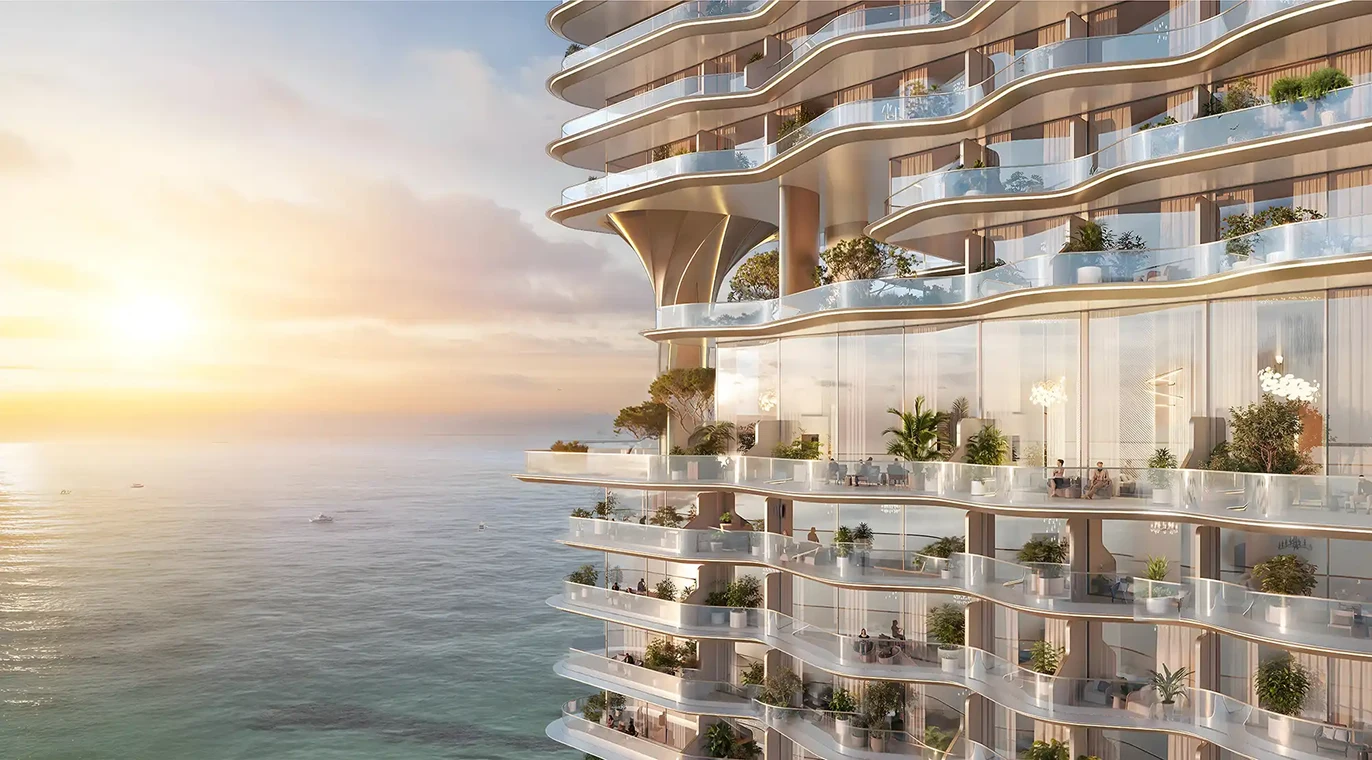
The premium segment remains in demand. Projects are often located by the water or launched in collaboration with global brands, which naturally limits supply and supports demand.
In addition, buyers in the luxury segment are typically end users rather than speculative investors, which makes this part of the market more resilient during a crisis. The budget segment is more exposed. These projects are often delivered by newer developers whose construction pace depends heavily on ongoing sales. In an environment where buyers are taking longer to commit, this may lead to delays or even frozen construction.
Get a Dubai new-build
shortlist for your strategy
Up to 5 options with strong resale potential
and trusted developers
What Supports the UAE Property Market Even in a Period of Turbulence
In 2025, Dubai set another transaction record, with more than 215,896 deals, according to DXB. The market’s resilience is underpinned by a combination of demographics, government measures, demand and the country’s financial strength. Here is what makes the UAE property market resilient in the face of geopolitical shocks.
Payment structure
In Dubai, most property transactions are completed without a mortgage, either with cash or via a developer payment plan. This is an important marker of market resilience: the higher the share of transactions backed by bank debt, the more exposed the market is to rising rates and tighter lending conditions. When demand is driven primarily by non-mortgage buyers, the market is less reactive when faced with crises and remains more stable.
Below is a breakdown of transactions by payment method for February 2025–2026, based on DXB data.
| Total Transactions | Cash Transactions | Mortgage Transactions |
|---|---|---|
|
218,352 |
197,843 |
20,509 |
|
90% |
10% |
Markets react sharply to high debt loads. When most transactions are completed without a mortgage, the risk of rapid forced sales is lower.
A steady inflow of expats
A growing expat population supports demand for both home purchases and long-term rental. The more new residents move to the UAE, the more stable the demand base becomes.
The chart below shows Dubai’s population growth in October from 2008 to 2025. Source: DXB.
-(1)-1.webp)
Native Emiratis account for only around 10–15% of Dubai’s population. The vast majority are foreign professionals and workers
Government support measures
Buying property in the UAE may give investors more than stable rental income and capital preservation in a relatively secure asset.
The key state-backed mechanisms that continue to support investor interest are:
1. Eligibility for a UAE residency visa. This strengthens the case for buying property for personal use: the investor gains more rights in the Emirates and may relocate with family.
2. Freehold ownership of property. This makes the market more transparent and more accessible to international capital because investors can own property in their own name without a local partner.
3. Escrow accounts. These reduce risk at the point of purchase and improve buyer confidence by helping ensure that the project is actually delivered.
Government support measures introduced during Covid-19 also helped stabilise the property market:
rental relief measures, including deferred property-related payments, rent reductions for restaurants and retail units and more flexible terms for residential tenants;
support measures for developers, aimed at ensuring future supply.
These policies further strengthened Dubai’s reputation as a predictable and resilient jurisdiction.
Limited supply in the premium segment
The UAE remains one of the main global magnets for millionaires. Developers are trying to meet their expectations by creating projects with a high-quality living environment. As a result, the strongest launches often sell out within hours or days.

Branded residences in Dubai are luxury homes created in partnership with global brands, offering a high level of service, distinctive design and premium infrastructure.
Limited supply supports liquidity in the market. According to Neginski’s analysis, the average selling period for an apartment in top-tier primary market projects is 1–3 days, compared with 30–60 days on the secondary market.
Which Segment of the UAE Property Market Carries Risks in 2026
At present, registration procedures, bank settlements and development activity have not stopped. The state is reacting quickly through regulatory measures and economic support. Even so, there are two segments that currently look more vulnerable than the rest.
Projects by inexperienced developers
In a turbulent market, the first developers to lose resilience are those without a track record and with a heavy dependence on sales. They do not have completed projects generating profits that could fund new construction. Their only source of financing is buyers’ money.
In a market where buyers take longer to make decisions, this can create cash flow gaps and lead to construction delays.
A safe, transparent property
deal in Dubai with full support
Clear steps: documents, payments, risks,
and common pitfalls
.webp)
Short-term rental
Since Iran’s first attack, demand for summer holidays in the UAE has already fallen by 50%. This affects occupancy in hotel rooms and apartments and, as a result, rental yield.
The residential market, however, remains stable. Expats are still renewing their leases because Dubai has become home to them. For many residents, established day-to-day life outweighs external events, so no major decline is expected in long-term rental or owner-occupier demand.
Andrey Neginskiy
Real estate expert, CEO of Neginski
How should Dubai property investors act in 2026?
At Neginski, we encourage investors to stay measured: do not panic, do not rush to withdraw funds from assets or abandon deals, but do take the current geopolitical environment into account.
The current situation does not eliminate investment opportunities in the Emirates, but it does increase the importance of decision quality and stronger risk management.
In these conditions, the advantage will go to investors who incorporate geopolitical risk into their strategy: those who focus on reliable developers with a proven track record and solid financial standing, and who buy in more resilient segments, including premium property.
Andrey Neginskiy
Real estate expert, CEO of Neginski
About the Author & the Company
Andrey Neginskiy
Real estate expert, CEO of Neginski
This article was prepared by the Neginski team — an international real estate agency with teams in the UAE, Moscow and Phuket. We support clients at every stage, from clarifying goals and selecting a project to completing the purchase and managing the property.
We work with 300+ developers, get early access to off-market launches, source rare listings and negotiate discounts. More than 30% of our clients come back for repeat purchases. Learn more about us.
Disclaimer
The information in this article is for general guidance only and does not constitute individual legal, investment or immigration advice. Property purchase terms, instalment plans, mortgage financing, rental rules and UAE residency visa options depend on the specific project, developer, bank, property status and the buyer’s individual profile.
UAE laws and regulatory requirements may change. Before making any decisions, we recommend getting personalised advice and confirming the latest terms with the Dubai Land Department (DLD), the developer, the bank or licenced advisers.
Sources
This article is based on publicly available data, Neginski’s analysis and the team’s hands-on experience.
Links:
Emaar vs Aldar: Which Developer Should You Choose in the UAE for Investment? | Neginski Real Estate
UK House Price Index - Office for National Statistics
IDF: 80-90% of Iranian missiles intercepted, but 24 Israelis killed | The Jerusalem Post
Track Dubai Real Estate Prices 2025 - Monthly Charts & Updates
Dubai Population growth and demographics 2026
Five Safe Countries: Which Destinations Tourists May Choose Instead of the UAE?
FAQ
-
At the moment, the UAE property market is not falling. It is moving into a more balanced phase after a period of rapid growth. Geopolitics is affecting transaction speed: some investors have adopted a wait-and-see position, which has reduced the sense of urgency.
At the same time, deals are still going through, demand from residents remains in place and developers are offering more flexible terms. In periods like this, better entry points often appear because there is less competition and more room to choose an asset without pressure.
The decision depends on your strategy:
if you are investing for 3–5 years, the current market offers more balanced entry conditions;
if your goal is short-term resale, you need to be selective;
if you are buying for your own use, timing is less important.
-
At present, the market is not showing signs of a broad-based collapse. What is falling is transaction volume, not pricing across the board. Based on previous crises, a recovery phase is likely to follow within the next 6–10 months.
-
Because the stock market reflects investor expectations and sentiment towards companies, not the direct pricing of each project or the real condition of the housing market.
-
Off-plan property still has many advantages over ready property:
it is often quicker to secure at launch;
developer payment plans can run for up to four years;
it may become a strong asset with yields of up to 12% per annum if the developer, location and strategy are chosen carefully.
-
Yes. A developer payment plan reduces the need for large upfront capital and allows the rest of the funds to be used for portfolio diversification, which is especially valuable in a crisis environment. Taking out a mortgage in Dubai in 2026 is riskier because the greater the share of bank debt in the market, the more exposed the market is to rising rates and tighter lending conditions.
-
Short-term rental is under pressure because of the loss of a large share of tourists, but the long-term rental segment remains stable because expats are not leaving Dubai and continue to renew their leases.
-
In 2026, both matter, but the developer matters especially. Only those with strong finances and no critical dependence on early-stage buyer funding are likely to move successfully into the market’s next growth phase.
-
A prolonged logistics shutdown, a drawn-out conflict, worsening insurance conditions, a deep decline in transactions and weaker migration inflows.